 Skip to main content
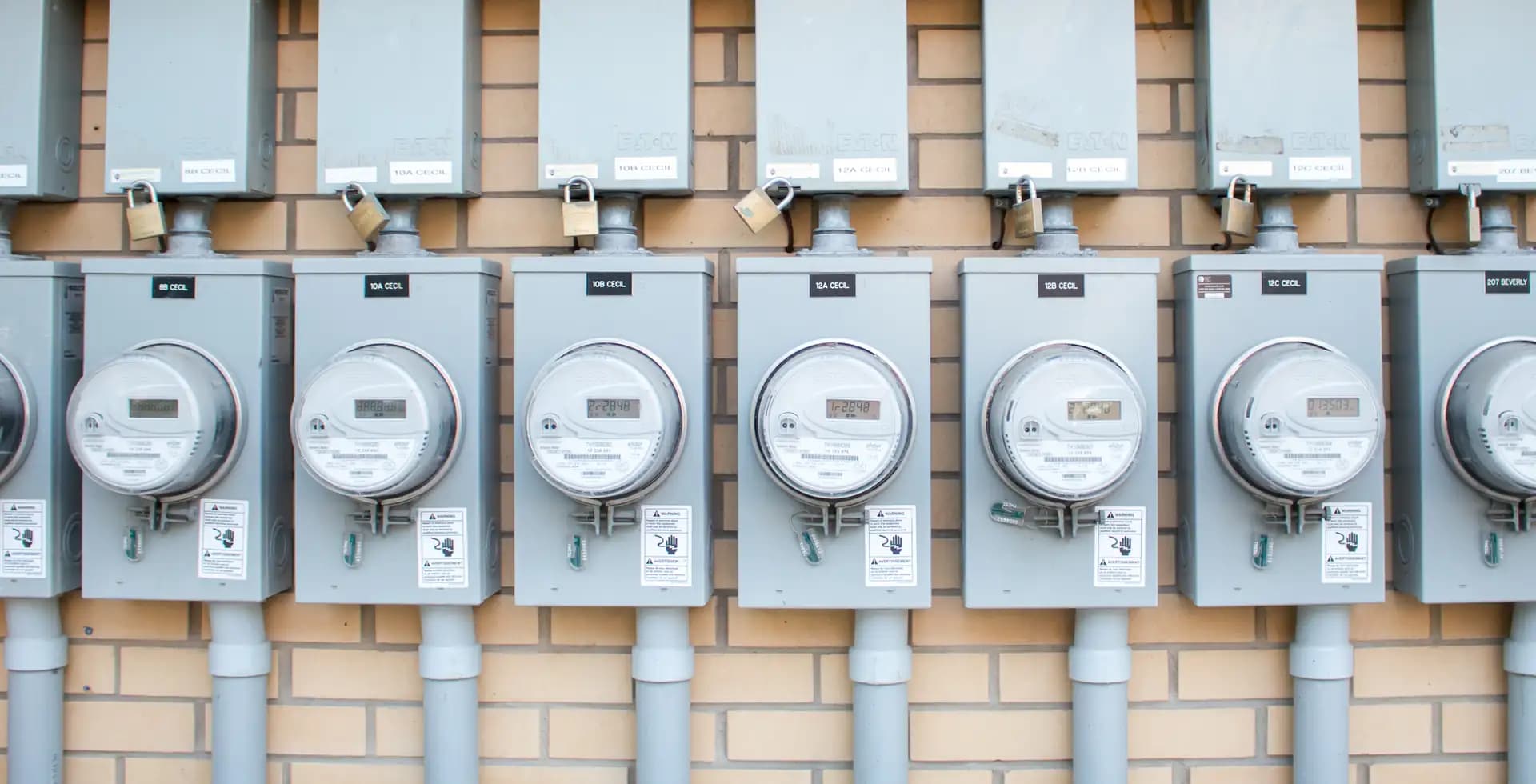
IoT Connectivity for Utilities & Smart Metering
Cellular IoT gives utilities, metering providers and equipment manufacturers a way to connect remote assets without depending on fixed broadband or local Wi-Fi.
Get control over your power, with smart controlled solutions.
Utilities depend on information from equipment that is often distributed across thousands of locations.
Meters. Pumps. Solar assets. Monitoring equipment. Environmental sensors. Remote telemetry.
The value of those systems depends on one thing happening reliably: the data needs to get back.
Cellular IoT gives utilities, metering providers and equipment manufacturers a way to connect remote assets without depending on fixed broadband or local Wi-Fi.
Cellhire provides cellular IoT connectivity across technologies ranging from low-data LPWAN applications through to 4G and 5G, alongside multi-network access, SIM management and private networking options.
IoT Connectivity Designed Around Utility Operations
Reduce dependence on a single mobile operator for suitable deployments.
Low-power cellular technologies for appropriate metering, monitoring and sensor applications.
Manage connectivity across distributed devices without visiting every asset.
Private/public IP, tunnelling and VPN options for controlled data routing.

Match low-volume and variable meter traffic to an IoT-specific commercial model.

Support equipment manufacturers and utility technologies deployed internationally.
How Do Smart Meters Work?
A smart meter measures consumption just like a conventional meter. The difference is that it can also communicate readings digitally.
That reduces the need for somebody to visit the meter and creates the potential for more frequent, accurate information.
But there is an important distinction in Great Britain: Domestic energy smart meters use the DCC network.
Most modern domestic electricity and gas smart meters installed under Britain's smart-metering programme communicate through the Data Communications Company (DCC) infrastructure.
The meter connects to a communications hub. Inside the property, the meter, communications hub and in-home display communicate over a Home Area Network.
The communications hub then carries authorised smart-meter messages over the DCC Wide Area Network to energy suppliers and other permitted users.
Smart DCC states that its communications hubs use cellular/wireless-mesh infrastructure in central and southern Britain and long-range radio in northern regions.
How Do Smart Meters Communicate?
The answer depends on the meter.
Domestic smart meters in Great Britain communicate through the DCC smart-meter network rather than relying on the homeowner’s broadband connection. A communications hub links the home-area devices to the DCC Wide Area Network.
Other meter types can use cellular connectivity where equipment needs to transmit readings to an operator, analytics platform or billing system. The right technology depends on data volume, power, coverage and hardware.
Water meters can be installed in locations where power and radio conditions are challenging. Low-power cellular technologies such as NB-IoT and LTE-M can be appropriate for some smart-water and sensor deployments because they are designed around low data consumption and power efficiency. Cellhire lists smart water management among LPWAN applications.
Solar farms and distributed renewable assets can use connected sensors, gateways and telemetry to report generation, equipment status and faults without requiring someone to visit the site to retrieve information.
Remote terminal units, sensors and gateways can provide information from geographically distributed infrastructure to central operations teams.
Where Can Cellular IoT Improve Utility Operations?
Connected water meters and sensors can transmit consumption and operational information remotely.
This can reduce reliance on manual collection and give operators better visibility across widely distributed assets.
Businesses, landlords and facilities operators can opt to use connected submetering to understand electricity, gas or water consumption across sites, tenants or individual pieces of equipment.
Cellular connectivity can be useful where those meters do not have reliable access to the organisation's own fixed network.
Solar sites can contain inverters, generation meters, environmental sensors and monitoring gateways.
Cellular connectivity allows information to be transmitted from locations where fixed broadband isn't unavailable or economical.
Pumps, generators, substations and other distributed utility assets can be monitored remotely using connected sensors and gateways.
The application can report operating conditions, alarms or faults to a central platform.
Sensors can measure water level, quality, air conditions, weather and other environmental data across locations that are difficult to reach manually.
As utility infrastructure becomes increasingly distributed, connectivity can support monitoring and control systems operating beyond the boundaries of a single private network.
Which IoT Technology is Right for Smart Metering?
There is no single correct network technology for every meter.
NB-IoT
Best considered where:
- data volumes are small;
- power efficiency is important;
- the device is largely stationary;
- the application does not need high throughput.
NB-IoT is designed for low-bandwidth IoT applications and is commonly associated with sensor and metering use cases.
LTE-M
Best considered where:
- low power still matters;
- more data or mobility is required;
- the device needs greater flexibility than a very narrow-band application.
Cellhire identifies LTE-M and NB-IoT as LPWAN technologies suited to low-data, low-power IoT applications.
4G
Useful for gateways and equipment requiring higher data rates than basic meter telemetry.
5G
Relevant where a utility application genuinely requires higher capacity, lower latency or other 5G capabilities.
A meter transmitting a small reading every few hours does not need the same network as a high-bandwidth monitoring gateway. Use the lowest-complexity technology that reliably meets the application's requirements.
Long-Life Meters Need Long-Term Network Planning
Utility equipment can remain deployed far longer than ordinary consumer electronics. That makes mobile-network lifecycle important.
The UK's 3G networks have now been switched off.
2G services are being phased out over the coming years as operators move towards newer network technologies. Ofcom continues to advise organisations to identify equipment that still depends on legacy networks and plan migration accordingly.
Before approving a meter or telemetry device, confirm:
- which cellular technologies the modem supports
- whether it still depends on 2G
- whether NB-IoT, LTE-M, 4G or 5G is appropriate
- how long the equipment is expected to remain installed
- whether firmware can be updated remotely
- what the migration route is if network technology changes
A modern SIM cannot make a legacy-only modem support a newer radio network. Connectivity and hardware need to be planned together.
Remote SIM Management Matters When Meters Number in the Thousands
A smart-metering estate can become difficult to manage long before it becomes technically complicated.
Someone needs to know:
- Which SIMs are active?
- Which are consuming data?
- Which have stopped communicating?
- Which need to be barred?
- Which tariff are they using?
Cellhire's IoT SIM-management platform can manage anything from individual connections to thousands of SIMs across multiple locations.
It provides real-time SIM management, diagnostics, automated rules, reporting and API integration.
Provisioning
Control SIM status remotely.

Usage monitoring
See how connections are consuming data.

Automation
Create rules and triggers around connectivity behaviour.
Diagnostics
Investigate connectivity problems without immediately sending somebody to site.
APIs
Integrate supported SIM-management functions into existing operational systems.
Smart-Meter Security Goes Beyond Encryption
Utility connectivity should be designed as part of the wider security architecture.
A connected meter or gateway may need to communicate only with a specific application or data centre.
Giving it uncontrolled access to or from the public internet may be unnecessary.
Cellhire's IoT connectivity supports options including:
- private IP addressing
- public/fixed IP options
- L2TP tunnelling
- IPsec
- secure remote VPN access
Private APN options are also available within appropriate Cellhire IoT propositions.
These controls do not replace device security. Meters and gateways still require appropriate credentials, encryption, software support and vulnerability management.
Should smart meters use multi-network connectivity?
Sometimes. Not every meter needs it.
If equipment is deployed at a known location with reliable service from one network, a single-network SIM may be sufficient.
Multi-network connectivity becomes more attractive when:
- devices are spread across many locations
- the installation environment is unpredictable
- engineer visits are expensive
- loss of connectivity affects operational processes
- the same hardware needs to be deployed nationally
For utilities, the important question is not whether multi-network sounds better. It is whether the increased network choice reduces operational risk enough to justify the solution.
What Should Utilities Check Before Choosing IoT Connectivity?
Why Cellhire for Utilities and Smart Metering?
UK multi-network connectivity
Access all four major UK networks through Cellhire's unsteered multi-network IoT proposition.
Low-power IoT options
Cellhire supports connectivity technologies including NB-IoT and LTE-M for appropriate sensor and metering applications.
Pooled low-data tariffs
Cellhire's current IoT SIM plans include pooled low-data options designed for connected-device estates.
Central SIM management
Manage remote connectivity using Cellhire's SIM-management platform, diagnostics, alerts and APIs.
Secure connectivity architecture
Private/public IP, tunnelling and VPN options help support controlled routes between field equipment and authorised platforms.
Global IoT
For manufacturers deploying utility hardware internationally, Cellhire's IoT proposition supports permanent roaming across more than 400 networks in 185+ countries.
Test Connectivity Before You Install Thousands of Meters
Coverage and performance should be validated using the actual device. Cellhire's 60-day IoT SIM trial currently includes:
- two IoT SIM cards
- 1GB of data on each SIM
- access to all four major UK networks through the trial
- 60 days' access to ATLAS
- dedicated trial support
The trial can be used to test the real hardware, installation environment and data behaviour before a wider rollout.
Frequently Asked Questions
A smart meter measures energy or another utility and can communicate readings digitally rather than relying entirely on manual meter reading.
The exact communication architecture depends on the type of meter and market.
Domestic smart electricity and gas meters in Great Britain generally communicate through the DCC smart-meter network.
A communications hub connects smart-meter equipment inside the property and sends authorised messages over the DCC Wide Area Network.
Other commercial, industrial, water and utility applications may use cellular, radio or other connectivity depending on the system design.
Domestic SMETS smart meters do not normally depend on the customer's household Wi-Fi or broadband service.
The communications hub connects through the dedicated smart-meter communications architecture.
Some metering and telemetry equipment uses cellular SIM or eSIM technology.
However, Britain's domestic DCC smart-meter system should not be described simply as an ordinary SIM-card connection. Its communications hubs operate as part of the dedicated DCC infrastructure.
Cellhire should not be positioned as a replacement for the DCC communications infrastructure used by domestic SMETS smart meters.
Cellhire's cellular IoT connectivity is relevant to wider smart-metering and utility applications such as commercial/industrial metering, water, telemetry, renewables and connected gateways.
There is no universal answer. NB-IoT or LTE-M can suit low-power, low-data metering applications, while other equipment may require 4G or 5G.
Coverage, power, data, lifecycle and hardware should determine the choice.
NB-IoT is designed for low-bandwidth cellular IoT and can be appropriate for smart-metering and sensor applications where power consumption and small data transmissions are important.
LTE-M can support low-power IoT devices that need more flexibility, mobility or throughput than some very narrow-band applications.
The right technology depends on the equipment and network requirements.
A multi-network SIM gives compatible equipment access to more than one supported operator.
That can be useful where assets are distributed across many sites and depending on one network creates avoidable coverage risk.
Any utility equipment that depends exclusively on a legacy network needs to be identified and assessed.
UK 3G has already been switched off, while 2G retirement is being phased over the coming years.
A device's modem must support the replacement network technology; changing only the SIM is not always sufficient.
An IoT SIM-management platform provides a central place to monitor, provision and diagnose connections.
Cellhire's platform supports real-time SIM management, automated rules, reporting, diagnostics and APIs.