Skip to main content
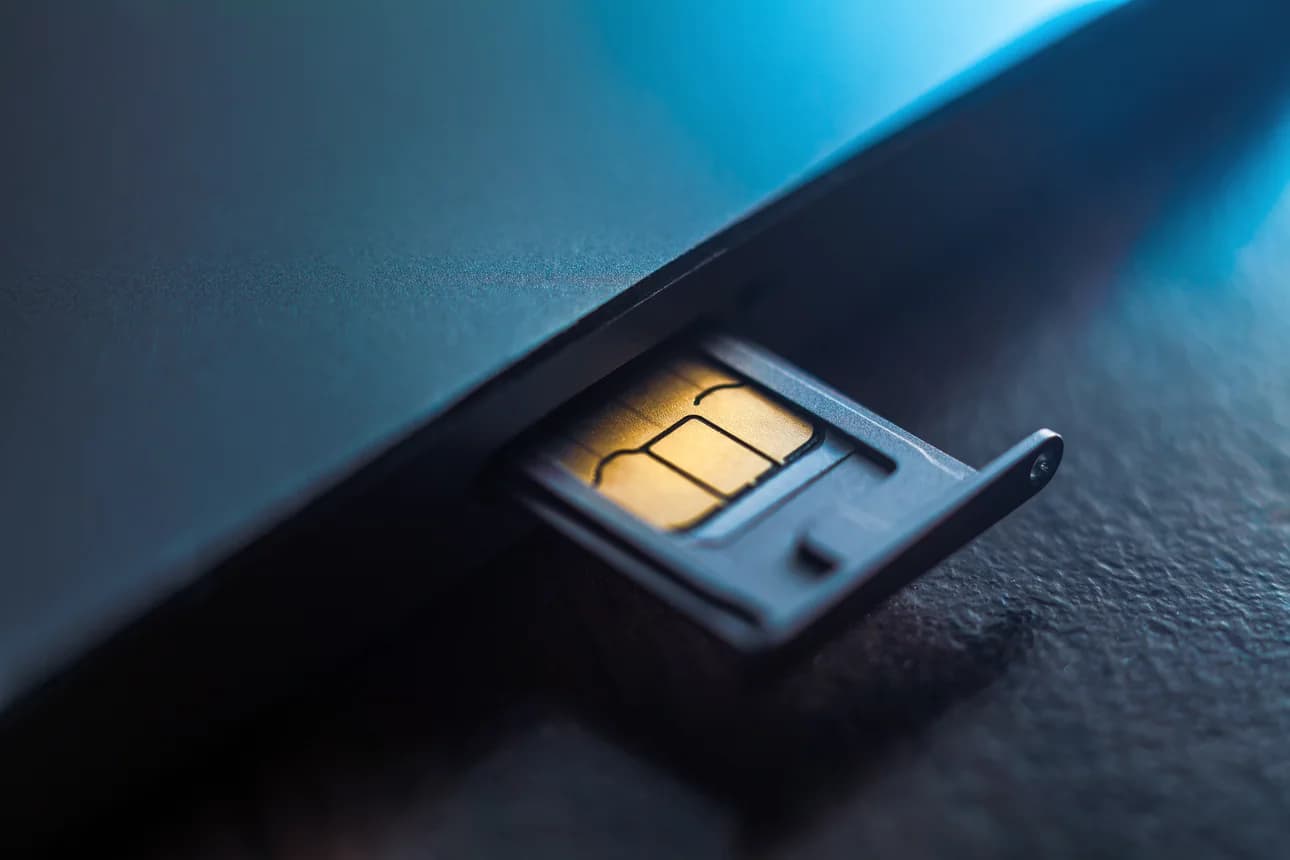
At first glance, an IoT SIM and the SIM inside a smartphone can look almost identical.
Both authenticate a device onto a mobile network. Both can enable cellular data. Both can use the same familiar Mini, Micro or Nano SIM form factor.
But put them into a deployment of hundreds or thousands of unattended devices and the differences become much more important.
A consumer SIM is primarily designed around an individual person using a phone, tablet or mobile broadband device. An IoT SIM is supplied as part of a connectivity service designed around machines: devices designed to operate unattended for years, move between locations, send data automatically and need to be managed remotely at scale.
That difference affects everything from network resilience and roaming to security architecture, data plans, SIM management and hardware choice.
So, if a standard SIM can technically connect an IoT device, why use a dedicated IoT SIM?
The answer is less about the small piece of silicon itself and more about the connectivity service, management tools and commercial model around it.
IoT SIM vs consumer SIM: the key differences
| Area | IoT SIM | Consumer SIM |
|---|---|---|
| Primary purpose | Automated device and machine connectivity | Personal mobile use |
| Network access | Can offer multi-network and global roaming options | Usually based around one home mobile network, with consumer roaming |
| Management | Central portal and potentially API-based fleet control | Individual account or device management |
| Data plans | IoT-specific, pooled, shared or low-volume data options | Consumer bundles typically designed around individual usage |
| Security architecture | Can support private APNs, private IPs, VPNs and controlled routing | Standard consumer mobile connectivity |
| Form factors | Mini, Micro, Nano and embedded MFF2 options | Primarily removable consumer formats |
| Deployment model | Built for fleets of unattended devices | Built around individual subscribers and devices |
| Lifecycle | Designed for long-running connected-device projects | Usually aligned to consumer device and tariff lifecycles |
Those differences are why a consumer SIM may be perfectly adequate for testing a prototype but become much less attractive once an IoT project moves into production.
What is an IoT SIM?
An IoT SIM, sometimes referred to as an M2M SIM, is a SIM and connectivity service intended specifically for Internet of Things and machine-to-machine applications.
Instead of enabling a person to browse the web, stream video or make calls from a smartphone, the SIM connects equipment such as:
- CCTV cameras
- smart meters
- environmental sensors
- asset trackers
- payment terminals
- digital signage
- routers
- industrial equipment
- vehicle telematics
- alarms and security systems
Some of those devices transmit only a few megabytes each month. Others, such as connected cameras or routers, may use much more.
What they have in common is that the connectivity is normally being managed by an organisation rather than by an individual user.
That changes what businesses need from the SIM provider.
If you have 5,000 devices deployed across the country, asking somebody to check 5,000 individual mobile accounts is not realistic. Nor is visiting equipment every time a SIM needs to be activated, suspended, or investigated.
IoT connectivity is built around solving those operational problems.
Can You Use a Standard SIM Card in an IoT Device?
Technically, sometimes yes. If the modem and SIM are compatible and the tariff permits the intended use, a consumer or standard data SIM can establish a cellular connection perfectly well.
For a development unit or small proof of concept, that may be enough.
The difficulties normally appear later.
Imagine deploying a connected alarm using a standard single-network SIM; it works in the office, and it works during testing.
You then install 2,000 units at customer locations across the UK and suddenly the important questions change to:
- What happens where that network has poor indoor coverage?
- How do you see which of the 2,000 SIMs are consuming data?
- How do you suspend one when a device is stolen?
- What happens when a device moves abroad?
- How do you set alerts for unexpected usage?
- Can the devices communicate over a private network architecture rather than simply connecting across the public internet?
That is where the distinction between "a SIM that works" and connectivity designed for IoT becomes important.
Here are some other key differences between an IoT SIM and a consumer SIM.
1. Network Access: One Network Can Become a Single Point of Failure
One of the biggest differences between consumer mobile connectivity and purpose-built IoT connectivity is the way network access can be designed.
A conventional UK consumer SIM has a home mobile network. It may roam when travelling abroad, but its normal domestic service is centred on that operator.
That is perfectly sensible for a smartphone. For unattended equipment, it can create an operational dependency.
If the network has weak coverage at the device location, experiences congestion or suffers an outage, the device may be unable to communicate.
Multi-network IoT SIMs provide another option.
Rather than depending on a single UK network, a multi-network SIM can be allowed to register on several supported networks. With an unsteered multi-network SIM, the device can select an available network according to signal and network conditions rather than being permanently tied to one operator.
Cellhire's multi-network IoT SIMs can access all four major UK mobile networks – EE, O2, Three and Vodafone – through a single SIM.
For CCTV, security, asset tracking, monitoring and other applications where loss of connectivity can trigger a site visit or interrupt a service, that additional network choice can be valuable.
It does not make outages impossible. What it does is remove some of the dependency on a single mobile network.
2. Global IoT Roaming is Different from Taking Your Phone Abroad
International roaming is another area where the distinction matters.
Consumer roaming is primarily designed around people travelling temporarily between countries.
IoT devices behave differently.
A tracker could cross several borders every week. A payment terminal may be shipped permanently to another country. A sensor could remain installed overseas for years without anyone physically touching it.
Those deployment patterns require the provider to think differently about roaming agreements, tariffs and long-term connectivity.
Purpose-built IoT services can support permanent-roaming arrangements across multiple countries and networks, subject to the relevant local regulations and operator agreements.
Cellhire provides global IoT connectivity across 400+ networks in 185+ countries, with permanent-roaming options intended for international IoT deployments. This can also simplify logistics.
Rather than stocking one SIM for France, another for Germany and another for the UK, organisations can opt to deploy a common connectivity solution across multiple markets.
For manufacturers and businesses shipping connected products internationally, reducing the number of SIM SKUs can make provisioning, inventory and support much easier.
3. IoT SIM Management is Designed for Fleets, Not Individuals
This is arguably the biggest practical difference once a deployment starts to scale.
A consumer mobile account is normally organised around a person or a small number of devices.
An IoT estate might contain ten SIMs. Or ten thousand. Businesses need to be able to see and manage those connections without physically accessing the device.
A good IoT SIM management platform can provide a central view of the estate, allowing teams to monitor usage, identify exceptions, activate or suspend connections, configure alerts and perform bulk actions.
Cellhire provides this through our SIM Management Portal. Rather than treating every SIM as a separate account, organisations can manage their connectivity estate from one environment.
That becomes particularly important when devices are deployed somewhere difficult or expensive to reach.
If an asset tracker suddenly starts consuming far more data than expected, the operations team can investigate. If equipment is stolen, its connection may need to be barred.
If several hundred SIMs need an administrative change, performing that as a bulk action is very different from managing each one manually.
For organisations that want to integrate connectivity management with their own systems, APIs become important too.
Cellhire's SIM Management Platform is underpinned by a REST API, allowing supported SIM-management and provisioning processes to be integrated into other operational systems.
At scale, that can turn connectivity management from a manual telecoms task into part of an automated IoT workflow.
4. IoT Data Plans are Designed Around Machines
Humans and machines use mobile data differently.
A smartphone user might watch video, join video calls, browse social media and download large files. Consumer tariffs therefore commonly bundle comparatively large volumes of data alongside other mobile services.
An IoT sensor may behave very differently.
It might wake once every few minutes, transmit a reading and return to a low-power state.
Another device may use almost no data for weeks before sending a burst of information. At the other end of the spectrum, an IoT-enabled CCTV camera may transmit substantially more.
That variation is why IoT connectivity providers use different commercial models.
Rather than forcing every connection into an identical consumer-sized bundle, IoT plans can include low-volume allowances and pooled or shared data across multiple SIMs.
With pooled data, the organisation buys an overall allowance that can be consumed across an estate.
That can be more efficient than trying to predict the exact consumption of every individual device.
Cellhire currently offers IoT bundles ranging from low-data allowances upwards, including pooled-data options designed for connected-device deployments.
The important procurement question is therefore not simply:
"What is the cheapest SIM?"
It is:
"What commercial model best matches the behaviour of the whole device estate?"
A tariff that looks inexpensive for one SIM can become expensive when multiplied across thousands of devices.
5. IoT Connectivity Gives Businesses More Security Architecture Options
It is easy to oversimplify this part of the comparison.
A consumer SIM is not inherently "insecure". Consumer mobile networks use established SIM authentication and network security mechanisms.
The difference is that enterprise IoT connectivity can provide additional controls around how device traffic is routed and accessed.
Depending on the application, those options can include:
- private APNs
- private IP addressing
- fixed IP options
- IPsec tunnelling
- VPN connectivity
- controlled remote access
These features can help organisations design connectivity around their security requirements rather than treating every device as a standard internet-connected endpoint.
For example, an organisation operating hundreds of remote cameras may want traffic routed between those devices and a central monitoring environment through a controlled private architecture.
Cellhire supports private and public IP options, L2TP and IPsec tunnelling, private APNs and secure remote VPN connectivity across our IoT proposition.
That does not mean the SIM replaces device security. An IoT product still needs secure software, strong authentication, appropriate patching and good lifecycle management.
The SIM and connectivity architecture are one part of a wider security model.
6. IoT SIMs Can Be Built for Harsher Environments
A smartphone normally lives in a relatively forgiving environment.
It spends much of its life in a pocket, bag, home, office or vehicle and is replaced comparatively frequently. IoT hardware may not be so fortunate.
A connected device could be installed:
- inside industrial machinery
- on a vehicle
- outdoors
- inside an electrical cabinet
- in a remote monitoring station
- within a sealed product
- somewhere exposed to repeated vibration or temperature changes
For those applications, industrial-grade SIM options are available with specifications designed for harsher environments and greater numbers of read/write cycles than typical consumer products.
The precise environmental rating depends on the SIM specification, so buyers should check the actual datasheet rather than assuming that every product carrying the "IoT SIM" label has identical temperature or durability characteristics.
This is particularly important for long-life equipment. A cheap removable SIM that becomes a physical failure point inside difficult-to-access machinery can create a maintenance cost many times greater than the SIM itself.
7. IoT SIMs Offer More Form-Factor Choices
Many IoT SIMs are available in the familiar removable formats: Mini SIM, Micro SIM and Nano SIM.
But IoT deployments can also use MFF2 embedded SIMs.
An MFF2 is soldered directly onto the device circuit board rather than being inserted into a removable SIM tray. That has several advantages for suitable applications.
There is no SIM tray or contact interface to become loose through vibration. The SIM cannot easily be removed by an end user. The device can also be designed as a sealed unit without requiring access to a physical SIM slot.
Cellhire offers its multi-network IoT connectivity across Mini, Micro, Nano and embedded MFF2 form factors. MFF2 should not, however, be confused automatically with eSIM.
An embedded physical form factor and a remotely programmable eUICC are related concepts but not identical ones.
For organisations requiring remote profile provisioning, eSIM/eUICC technology adds another layer of flexibility.
The GSMA's current IoT eSIM architecture, including SGP.32, has been developed specifically around remote provisioning and management for IoT devices that may have limited user interfaces or be difficult to access physically.
Cellhire also offers IoT eSIM and eUICC connectivity for deployments where remote profile management is appropriate.
8. IoT Connectivity is Designed Around a Longer Operational Lifecycle
Consumer connectivity assumes there is a person available to solve problems.
If a smartphone loses connectivity, its owner can restart it, change settings, replace the SIM or contact the network.
An IoT deployment may have nobody nearby. Devices can be installed for years in plant rooms, roadside cabinets, warehouses, vehicles, construction equipment or remote locations.
Every physical intervention has a cost. That changes the economics of connectivity.
If a £1 saving on a SIM causes an engineer to travel 150 miles to replace or troubleshoot a device, it was never really a saving.
IoT connectivity should therefore be evaluated over the lifecycle of the deployment.
Consider:
- how long the device will remain in service;
- whether the SIM can withstand its operating environment;
- whether networks can be changed or selected remotely;
- how usage will be monitored;
- how connectivity faults will be diagnosed;
- whether the tariff can change as usage evolves;
- how devices will be supported internationally;
- and what happens when the SIM or device reaches end of life.
The right decision is usually the one that reduces the total cost of operating the connected estate, not simply the upfront price of connectivity.
When Might a Consumer SIM Be Enough?
There are situations where using a standard SIM may be reasonable.
A developer testing one prototype on a desk does not necessarily need a sophisticated global connectivity platform.
A temporary internal project with one or two accessible devices may also have limited management requirements.
But the case changes as soon as the deployment becomes:
- larger
- geographically distributed
- difficult to access
- business-critical
- international
- security-sensitive
- or expected to remain operational for several years
That is the point where purpose-built IoT connectivity starts solving problems that consumer mobile services were never designed around.
How to Choose Between an IoT SIM and Consumer SIM
Instead of starting with the SIM itself, start with the deployment. Ask these questions:
How many devices will we manage?
Managing five connections manually is possible. Managing 5,000 that way probably is not.
Will devices stay in one location?
If they move around the UK, multi-network access may improve the chance of finding usable coverage.
Will equipment operate internationally?
Check roaming agreements, country coverage and any local restrictions before deployment.
What happens if the device loses connectivity?
The business impact determines how much resilience is worth.
How much data will devices actually use?
A low-volume sensor requires a very different tariff from a CCTV camera or 5G router.
Can somebody physically reach the device?
Remote management becomes much more valuable when the answer is no.
What security architecture is required?
Consider private networking, IP addressing, VPN connectivity and how devices need to communicate with business systems.
What environment will the SIM operate in?
For harsh or sealed deployments, consider industrial-grade and embedded form factors.
How long will the solution operate?
Think beyond the first-year connectivity price and examine the lifetime cost of management, support and intervention.
Why Choose Cellhire for IoT SIM Connectivity?
Cellhire's IoT connectivity is designed for deployments ranging from a handful of devices to large national and international estates.
Our offering includes:
- access to all four major UK mobile networks
- global coverage across 430+ networks in 191 countries
- permanent-roaming connectivity options
- unsteered multi-network SIMs
- Mini, Micro, Nano and MFF2 form factors
- IoT eSIM and eUICC options
- pooled IoT data bundles
- private APN and IP options
- L2TP and IPsec tunnelling
- secure remote VPN connectivity
- and central SIM management through the ATLAS portal.
Cellhire's SIM management environment also supports API connectivity for businesses that want to integrate connectivity provisioning and management with their own systems.
Together, those capabilities are designed to address the problems that start appearing when cellular connectivity moves beyond one user and one device.
Test an IoT SIM Before You Deploy
IoT connectivity should be tested with the actual device, in the actual environment where possible.
Coverage, hardware compatibility, data consumption and application behaviour can all affect the right connectivity choice.
Cellhire offers a 60-day IoT SIM trial that currently includes two IoT SIMs, each with 1GB of data, plus access to our SIM Management Portal.
That gives organisations an opportunity to evaluate Cellhire connectivity and management with their own hardware before committing to a wider deployment.
For businesses comparing an IoT SIM with a consumer SIM, that real-world test may be the most useful comparison of all.