 Skip to main content
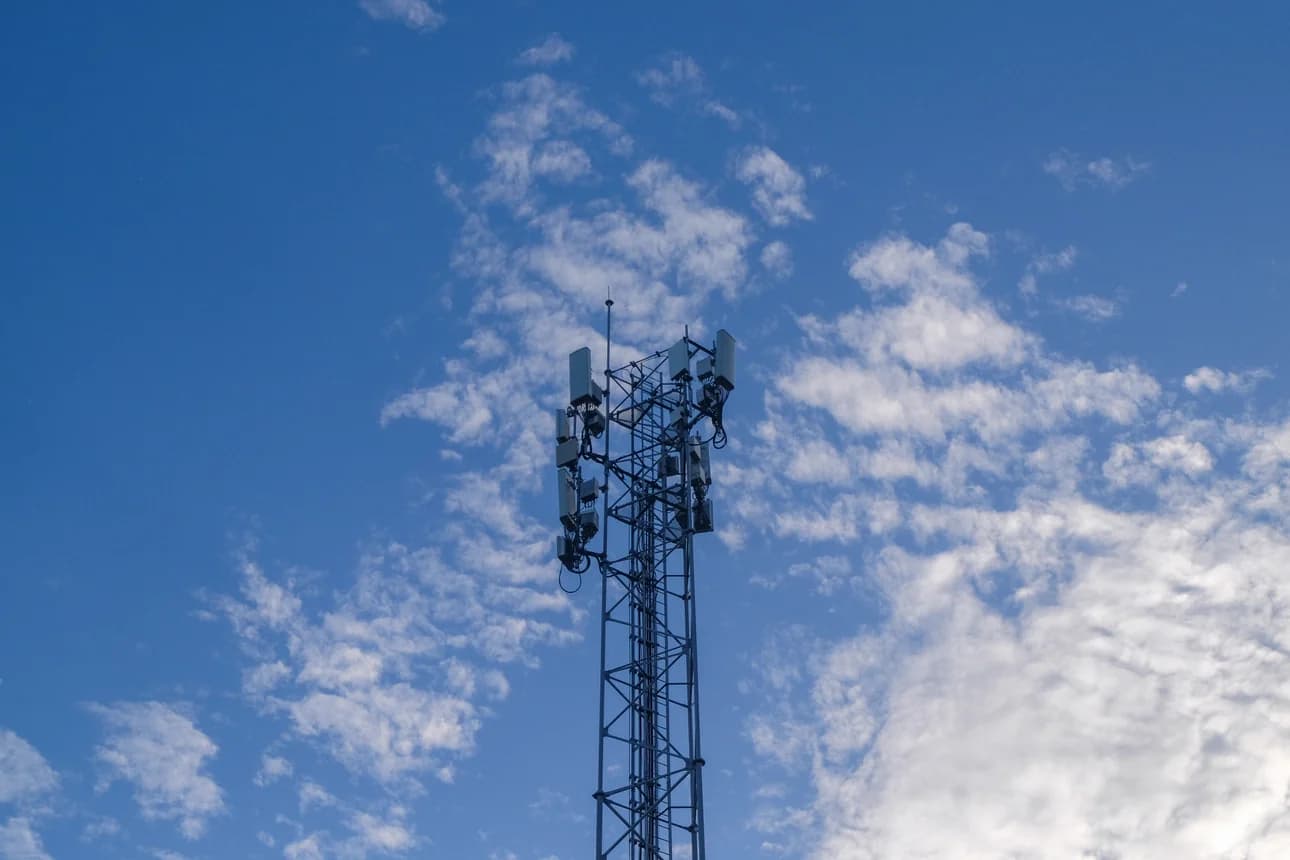
The Vodafone–Three merger legally completed on 31 May 2025, creating VodafoneThree. As of July 2026, Vodafone also acquired CK Hutchison's remaining 49%,[1] becoming sole owner. For channel partners and their business customers, the impact is subtle for now, but it's worth understanding where things are heading.
1. Network coverage should improve significantly
This looks like the biggest upside. VodafoneThree is combining the Vodafone and Three networks, including spectrum and radio infrastructure. In May 2026, VodafoneThree reported that up to 28.6 million customers were already automatically accessing the best available coverage, with 16,500 km² of previous "not-spots" eliminated.[2]
For businesses, this could mean:
- Better coverage for employees travelling around the UK
- Fewer coverage blackspots
- Improved 4G/5G availability
- Greater network capacity in congested areas
- Potentially better resilience
- Improved coverage for IoT, mobile broadband and connected devices
This could be particularly valuable for businesses with mobile workforces, field engineers, logistics operations and geographically dispersed sites.
2. Vodafone and Three SIMs aren’t simply becoming the same product overnight
This is an important distinction for anyone selling or managing business mobile. The merger doesn't mean a Three customer automatically becomes a Vodafone customer, or vice versa, the underlying networks are being integrated progressively.
VodafoneThree has already started allowing customers to use elements of both networks through network sharing, with more sites and spectrum being integrated as the programme continues.[3]
So for a business customer, the practical experience should increasingly move towards "one better network," rather than needing to think about whether their SIM is technically Vodafone or Three. Commercial arrangements, tariffs, billing, SIMs/eSIMs and contracts can remain separate during the transition.
3. There’s likely to be less choice in the UK mobile market
This is arguably the main potential downside. The UK has effectively moved from four major MNOs (EE, O2, Vodafone, Three) to three (EE, O2, VodafoneThree). The CMA explicitly flagged concerns that the merger could lead to higher prices and reduced competition, particularly during network integration, and approved the deal subject to legally binding commitments.[4]
For business customers, that could eventually mean:
- Less leverage when negotiating mobile contracts
- Greater pricing power for the three remaining MNOs
- Potentially less aggressive pricing on large fleets
- More importance attached to wholesale/MVNO alternatives
- Greater value in having a reseller or independent provider negotiate on the customer's behalf
This is particularly relevant for SMEs and mid-market businesses without the purchasing power of a large corporate.
4. The changing wholesale landscape
For wholesale resellers, this may be where the impact is most significant. As VodafoneThree integrates the two networks, it's also reviewing pricing and positioning of the Three portfolio sold through the indirect channel. The competitive Three tariffs that have made the network attractive to resellers seem likely to be phased out, repriced, or replaced with new VodafoneThree propositions, a shift that could materially change the economics of selling Three-based services.
For resellers, this could mean:
- Cheaper Three tariffs being withdrawn or repriced
- Existing tariff portfolios becoming more restricted, with new connections potentially moved onto higher-priced plans
- Reduced price differentiation between Vodafone and Three propositions as the businesses converge
- Pressure on margins, particularly where pricing was built around low-cost Three tariffs
- Greater importance placed on wholesale pricing and commercial terms
- More emphasis on value-added services, account management, international connectivity, unified billing, multi-network solutions and support, rather than competing purely on airtime price
This looks like a challenging transition for the indirect channel, given how central Three's low-cost positioning has been to many reseller propositions. At the same time, it may open a genuine opportunity for wholesale providers that can offer competitive alternatives across multiple networks, helping resellers stay price-competitive without leaning solely on the legacy Three tariff book.
For the indirect channel, the real question may not be the merger itself, but how VodafoneThree chooses to reposition Three's historically aggressive pricing within its wholesale strategy.
5. Network investment should ultimately be substantial
VodafoneThree has committed to an £11 billion network investment programme over 10 years, with the CMA's approval tied to commitments around network integration and upgrades.[4]
| Area | Likely business impact |
|---|---|
| Coverage | Better UK-wide coverage |
| 5G | Faster, more widely available |
| Capacity | Better performance in busy locations |
| Resilience | More robust network |
| IoT | Better connectivity for distributed devices |
| Field workers | Fewer coverage gaps |
| Mobile broadband | Improved alternative to fixed connectivity |
| Private/enterprise 5G | Potentially more sophisticated services |
| Network slicing | Potential for differentiated enterprise connectivity |
Network slicing is perhaps the most interesting long-term prospect. VodafoneThree has discussed using higher-quality 5G slices for business customers, potentially letting organisations like manufacturers buy connectivity optimised for demanding applications.[5]
A possible opportunity for business customers
There's also a case that the merger could make independent mobile providers and resellers more valuable, not less. Many business customers may increasingly think: "I don't particularly care whether the underlying network is Vodafone or Three. I want the best UK coverage, competitive pricing, international roaming, one bill, good support, and someone else to manage the complexity."
That's a strong proposition for an independent provider, and it opens the door to selling multi-network connectivity, where a business uses a mix of networks based on coverage, geography, resilience and use case, rather than sitting entirely on VodafoneThree.
In summary
For business customers, the merger might be characterised as:
Short term: more integration and some commercial uncertainty; less MNO choice; existing contracts largely continue; worth watching for changes to tariffs, platforms and service arrangements.
Medium/long term: better Vodafone/Three coverage; more 5G capacity; greater resilience; more enterprise-focused capabilities; potentially higher prices as competition reduces.
For mobile resellers and wholesale providers, this could represent a significant opportunity, as customers increasingly value an independent partner who can manage network choice, pricing, billing and connectivity, rather than dealing directly with VodafoneThree.
References
- ^ Vodafone, "Completion of Vodafone and Three merger in the UK" (2 June 2025) - official confirmation that the merger completed on 31 May 2025, forming VodafoneThree (51% Vodafone, 49% CK Hutchison), with the £11 billion, 10-year investment commitment: https://www.vodafone.co.uk/newscentre/press-release/completion-vodafone-three-merger-uk/
- ^ Vodafone, "World-first network upgrade completed in the UK by VodafoneThree" (28 May 2026) - source for the 28.6 million customer figure and 16,500 km² of not-spots eliminated: https://www.vodafone.co.uk/newscentre/press-release/world-first-network-upgrade-emocn-completed/
- ^ Vodafone, "VodafoneThree delivers automatic coverage improvement to millions of customers, at no extra cost, by sharing network access" (11 August 2025) - earlier progress update on network sharing (MOCN technology), including the 7 million Three/SMARTY customers seeing 4G speed boosts of up to 40%, and the plan to eliminate not-spots and expand 5G coverage: https://www.vodafone.co.uk/newscentre/our-network/vodafonethree-delivers-automatic-coverage-improvement-millions
- ^ GOV.UK (Competition and Markets Authority), "How we investigated the Vodafone / Three merger" (last updated 2 June 2025) - CMA's own account of the phase 1 and phase 2 investigation, its provisional competition concerns, and the legally binding undertakings (network plan, tariff caps, wholesale pricing terms) agreed on 28 March 2025: https://www.gov.uk/guidance/how-we-are-investigating-the-vodafonethree-potential-merger
- ^ The Times, "Why Britain's phone signal is so bad — and your bill may go up to fix it": https://www.thetimes.com/business/companies-markets/article/why-uk-phone-signal-poor-02wvhd6wd